True-to-Scale Targets
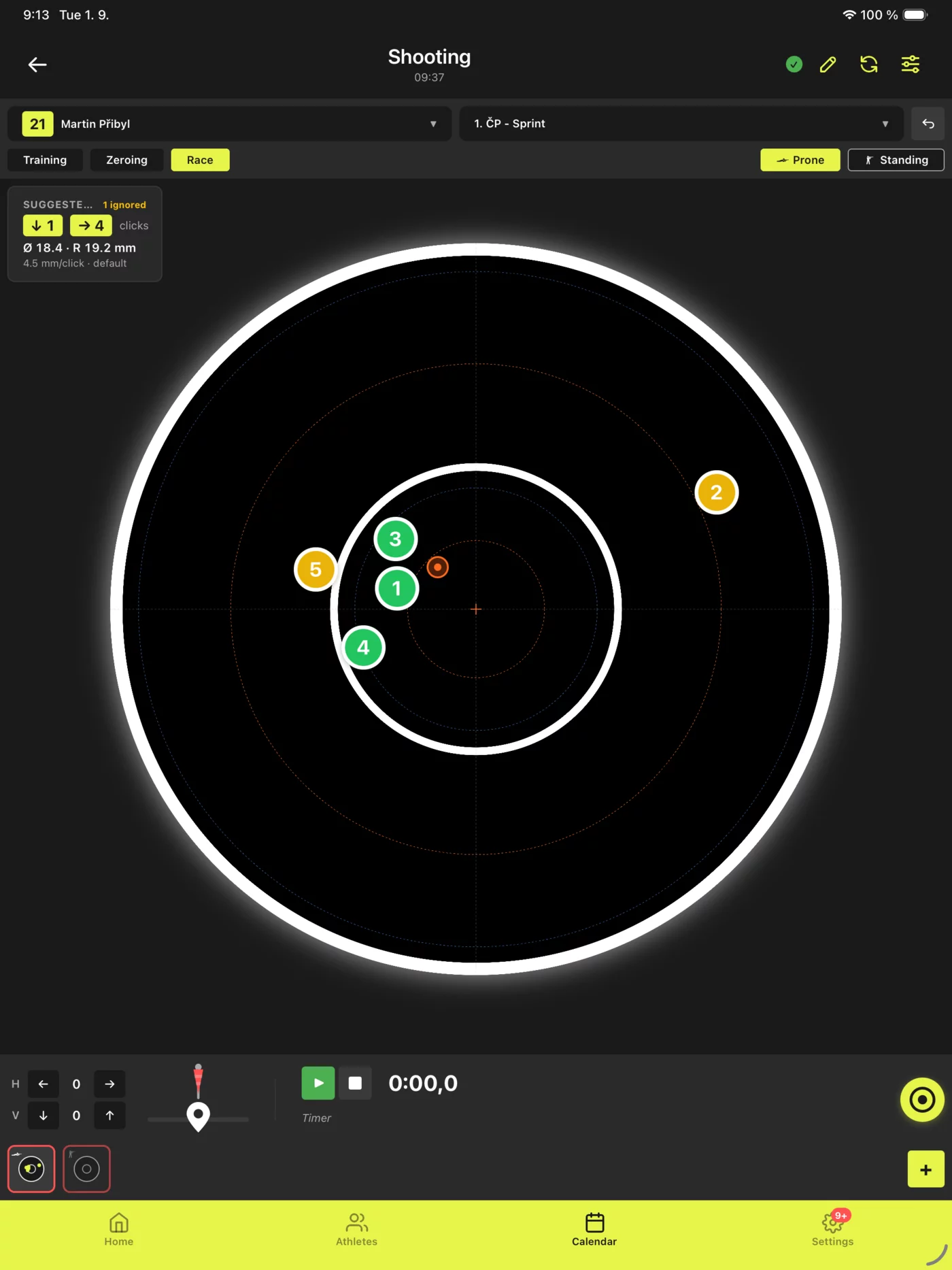
Prone and standing targets drawn to true 45 mm and 115 mm proportions — a group on screen sits where it sat on the range. S/M/L markers keep it readable on a phone at the mat or a tablet on the bench.

Every Shot, Recorded and Understood
Record a biathlon shooting session as it happens. Tap where each shot landed on a true-to-scale target — 45 mm prone, 115 mm standing — and BiathlonHub keeps the hit pattern, the split times and the conditions together in one record.
No notebook, no photo of the target, no reconstructing the session from memory. Training, zeroing and race shooting stay in separate histories, so a session you shot in November still reads clearly in March.
Prone and standing targets drawn to true 45 mm and 115 mm proportions — a group on screen sits where it sat on the range. S/M/L markers keep it readable on a phone at the mat or a tablet on the bench.
Three session types, each with its own history and statistics. Race shooting never gets averaged into practice numbers, and zeroing stays where you can find it.
Split times for every target, plus a rhythm score for the whole series — so you see not just that the pace slipped, but on which shot.
Hit rate broken down by shot 1 through 5. Most athletes lose the same shot every time; this is where you find out which one.
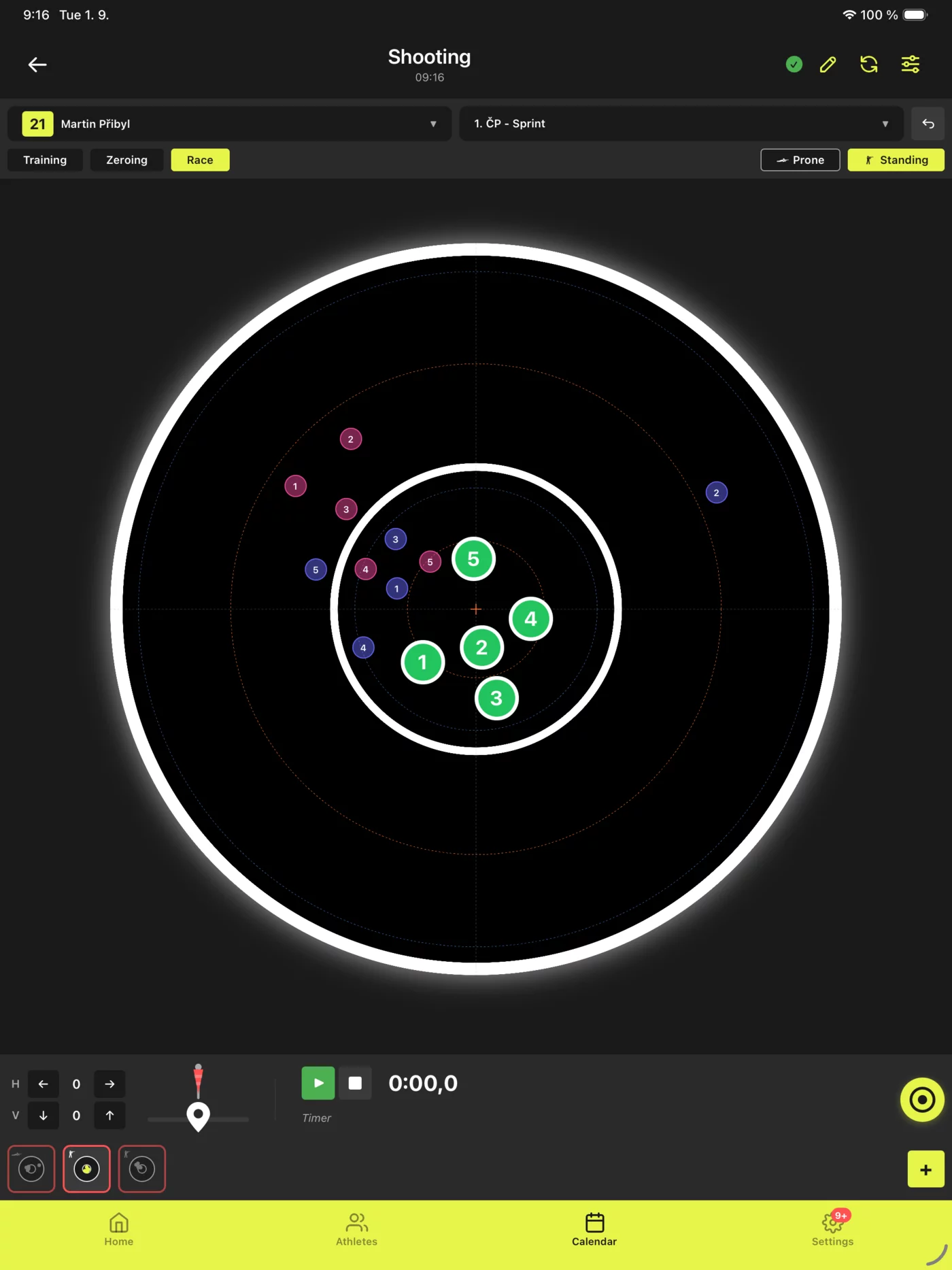
Overlay earlier targets on the current session. A sight correction either moved the group or it didn't — now you can tell which.
Temperature, wind and precipitation are stored with every session, so a bad day at the range can still be read in context months later.
Pair an external LED panel over Bluetooth and mirror the targets, so a whole training group can follow the shooting live.
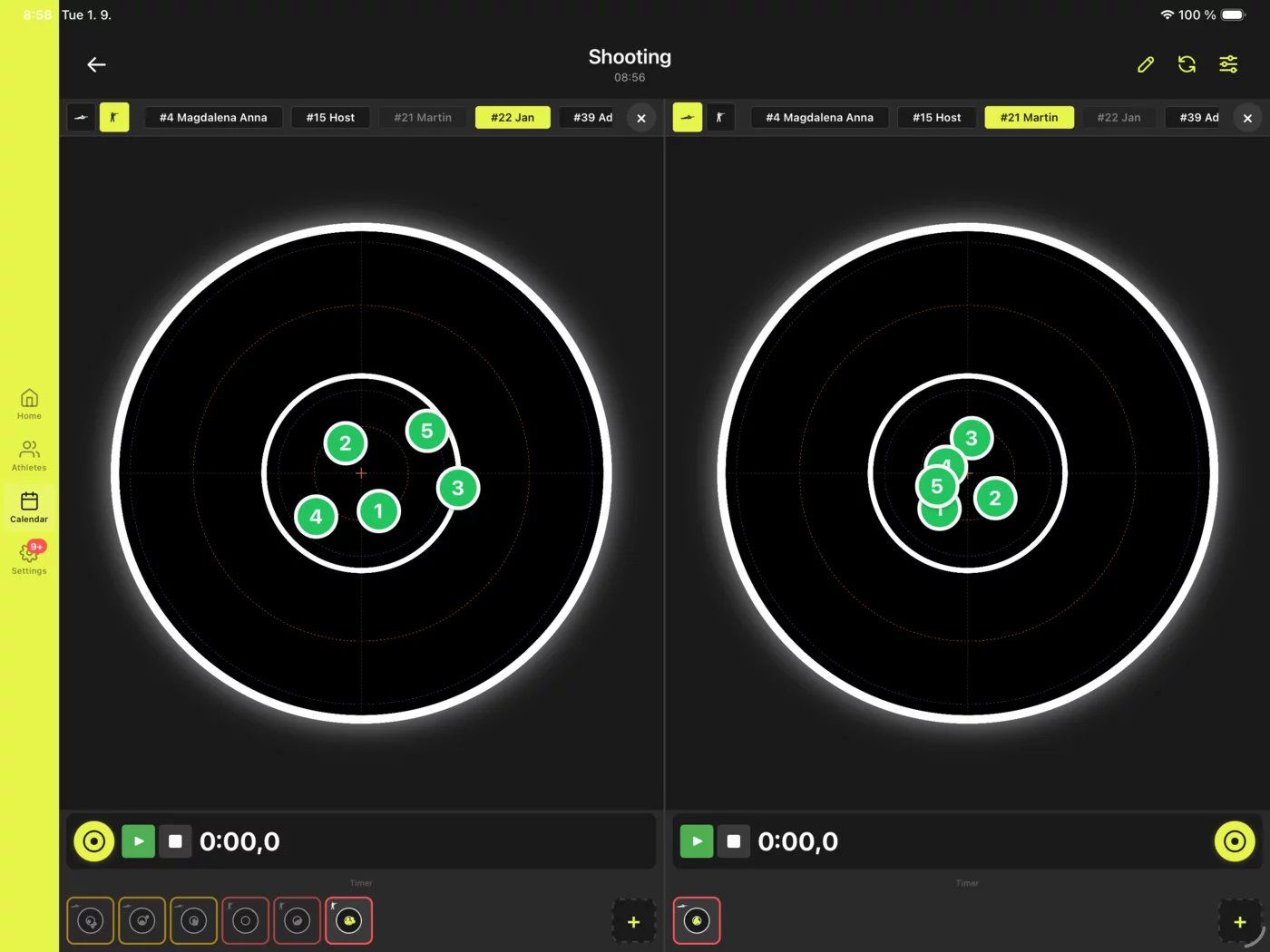
Yes, on a larger screen. Open the shooting settings and switch on 2 targets to show both targets side by side.
In the shooting settings you can have one or more previous shootings displayed faintly on the target, or a single shooting picked from the same event.
The app can also calculate the average position of all shots, which makes corrections easier to judge during zeroing.
No. There is a setting that calculates the weapon correction for you. It allows for the common case where one or two shots go wide because of an athlete error rather than the zero, so those shots don't distort the result.
Corrections can also be set up from the current athlete's diopter settings.